HSK 1 to 9 learning, built for HSK 3.0
Prepare for every HSK level through stories you will actually remember.
Short Chinese stories with pinyin and an English translation. Tap any word to see what it means.
Built on the HSK 3.0 syllabus.
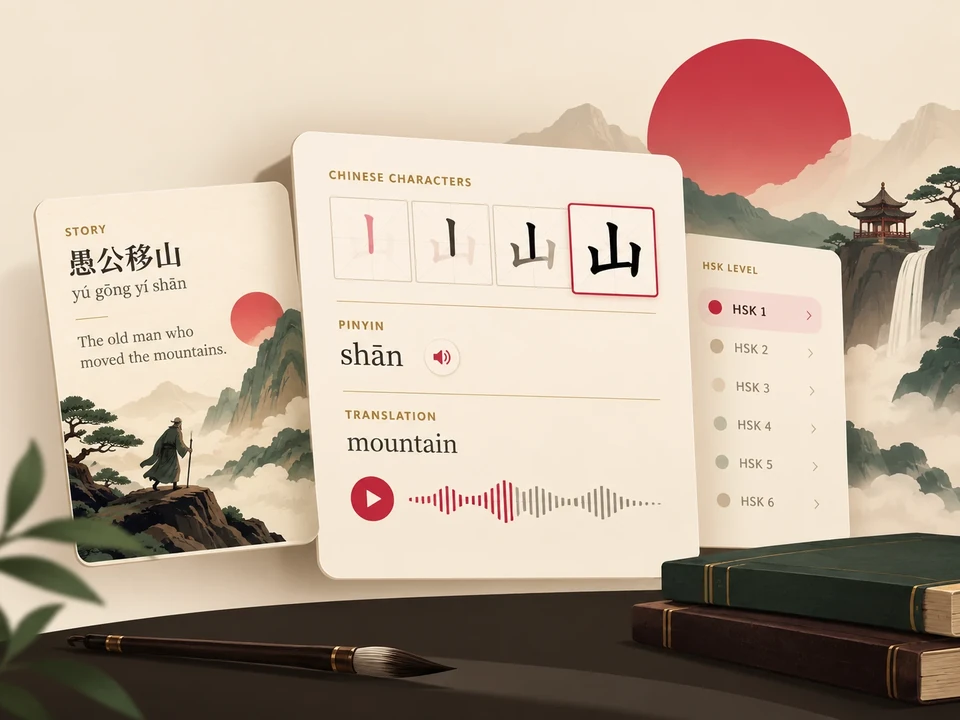
- Built on HSK 3.0 Word lists and levels follow the official syllabus.
- 90 stories, free Every level from HSK 1 to 9. No account needed.
- How Chinese works Clear explanations of tones, characters and grammar, not only word lists.
- Dictionary and stroke order Look up any word in English, pinyin or Chinese.
Chinese conversation
Mythic Mandarin on YouTube
Listen to everyday Chinese conversations on our YouTube channel. Come back to the episode notes for useful phrases, vocabulary and speaking practice.
- 01Listen for the meaning
- 02Say it out loud
- 03Read the episode notes
Find your level on the way to the Dragon Gate
The carp that leaps the Dragon Gate becomes a dragon. Your path is the same: one level at a time, one story at a time. Every level is free to read while the stories are in preview.
- HSK 1, 300 words, , 10 stories available
- HSK 2, 500 words, , 10 stories available
- HSK 3, 1,000 words, , 10 stories available
- HSK 4, 2,000 words, , 10 stories available
- HSK 5, 3,600 words, , 10 stories available
- HSK 6, 5,400 words, , 10 stories available
- HSK 7–9, One advanced band, 11,000 words, , Story tracks: Level 7, Level 8, Level 9
Word counts are cumulative, from the official HSK 3.0 syllabus. In HSK 3.0, levels 7, 8 and 9 form one advanced band. Level 7, Level 8 and Level 9 are Mythic Mandarin story tracks that split this band into steps; they are not separate official exams.
Levels follow HSK 3.0, the new version of the exam. What changed in HSK 3.0
How Chinese works
Mythic Mandarin does not only give you vocabulary. It explains how the language works, so every new word fits into a system you understand.
- How Chinese Grammar WorksNo verb endings, no plurals, no genders. How Chinese builds meaning with word order and small words.
- Chinese TonesPitch changes meaning in Mandarin. Learn the four tones, the neutral tone and how to hear them.
- Chinese Characters & WordsChinese has no alphabet. See what a character is and why most everyday words have two of them.
- Chinese Word OrderWho, when, where, then the action. The one pattern that makes most beginner sentences correct.
- Measure WordsThree books is 三本书, not 三书. See why every count needs a measure word and which ones to learn first.
- Simplified vs TraditionalTwo ways to write the same language. Where each is used, what differs and which one to learn.
- Separable Verbs & ParticlesSmall words with big jobs: 吗, 吧, 了, 过, and verbs like 见面 that split in two.
Start with HSK 1 and HSK 2 stories
Short stories with pinyin, translation, word taps and questions with explanations.
How a lesson works
About ten minutes. Small, steady progress beats a plan you cannot keep.
Read the story
Characters, pinyin and translation for every sentence. Hide the pinyin or the translation when you are ready.
Tap the words
See the meaning of any word and hear it at normal or slow speed.
Answer and see why
Questions in the style of the exam, with an explanation after you answer.
Speak or write
Try a short task yourself, then compare with a model answer. Finish with a seal on the lesson.
Inside a story
Chinese first, always. Pinyin and meaning sit right underneath, so you never lose the thread, and you can switch them off as your reading gets stronger.
- Tap a word: characters, pinyin and meaning in a small card
- Normal and slow playback of the Mandarin audio
- Pinyin and translation you can show or hide
- Vocabulary list with the official HSK level where it is verified
- Works on your phone, no app and no account for free stories
Free tools, word lists and tests
No account needed. Use them on their own or next to any story.
Look up any Chinese word
Search the dictionary in English, pinyin or Chinese characters. Every word has its own page with pinyin, meanings and animated stroke order.
Myths and idioms that make words stick
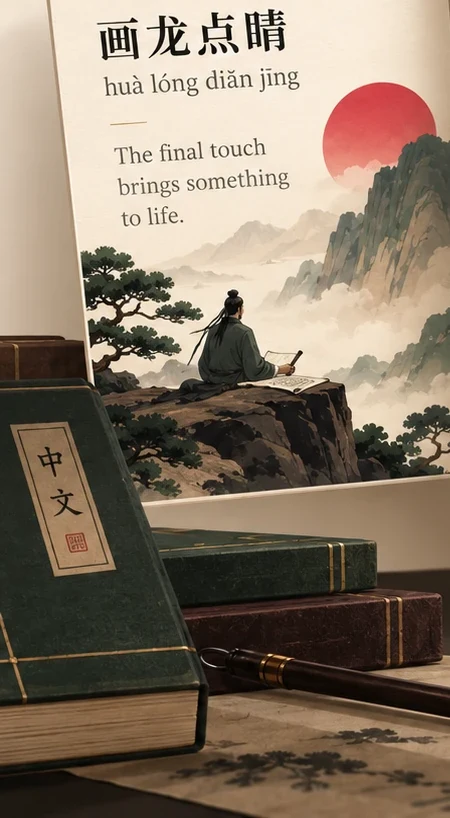
Some stories retell Chinese myths and the tales behind chengyu, the four-character idioms. A word you met inside a story about a carp and a waterfall is a word you remember. The rest follow everyday exam topics: study, work, travel.
Get new Chinese stories by email
Stories, useful words and practical learning tips. No spam. Unsubscribe anytime.